

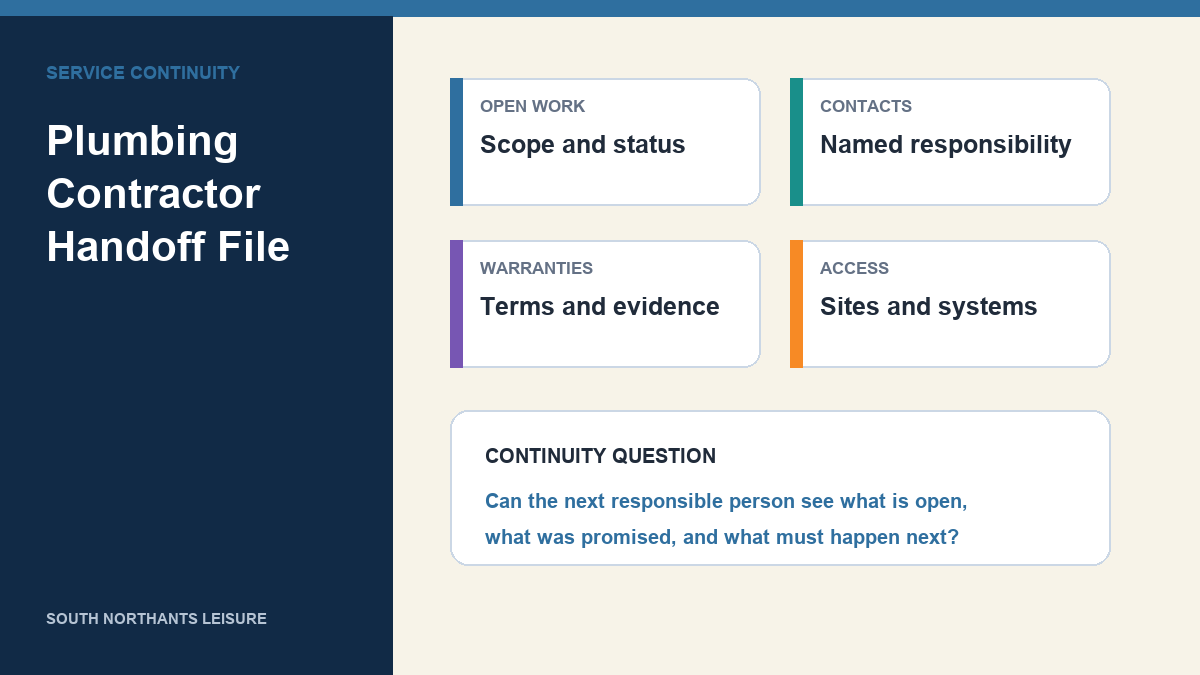
Understanding the Impact of a Plumbing Contractor Handoff
When a commercial plumbing company undergoes a change in ownership, the transition process extends far beyond the financial mechanics of the business itself. The impact on facility management can be profound. For facility managers overseeing large portfolios, commercial buildings, industrial complexes, or multi-family properties, this transition introduces a critical period of vulnerability and adjustment. The continuity of essential mechanical services, the integrity of ongoing preventative maintenance programs, and the responsiveness to emergency service calls are all immediately subject to the policies, personnel, and operational frameworks established by the new ownership group.
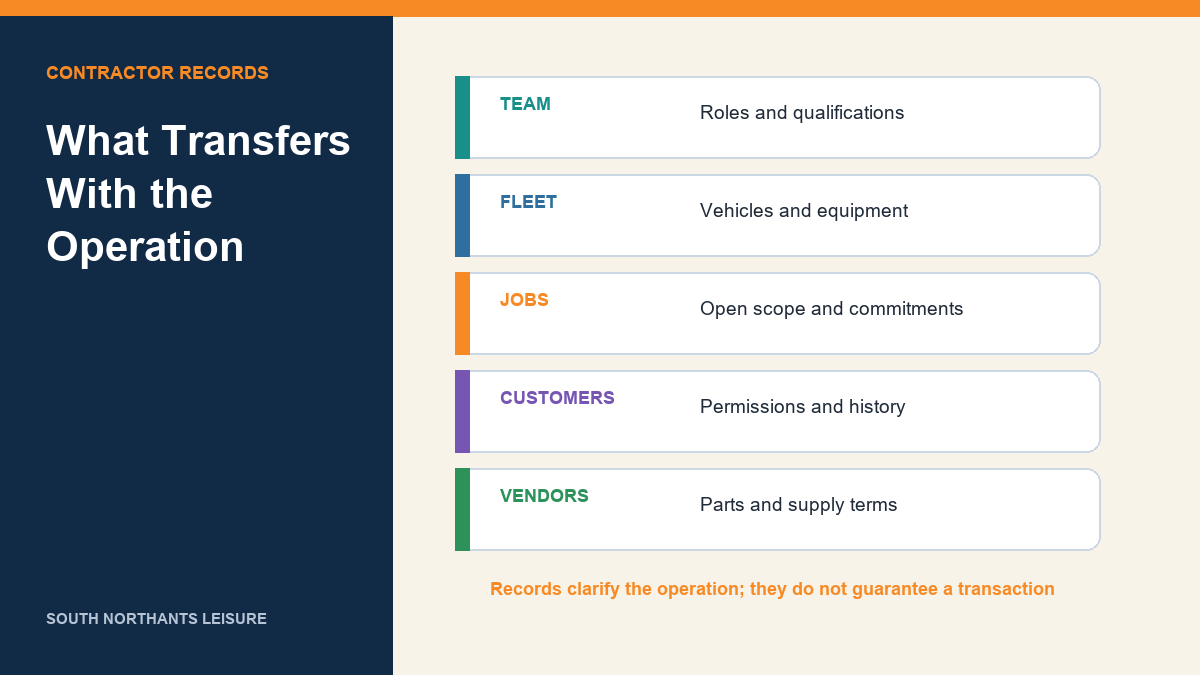
Recognizing this impact is the first step toward reducing disruption. Facility teams often rely on site-specific knowledge that a long-term plumbing contractor develops over years of service: the location of isolation points, the history of recurring faults, access constraints, and prior repairs. If familiar technicians leave, diagnosis may take longer unless that knowledge has been captured. The Small Business Administration guide to closing or selling a business is written for US business owners, but its emphasis on planning records and obligations illustrates why a structured handoff matters.
Assessing Continuity Risks When Your Contractor Changes Hands
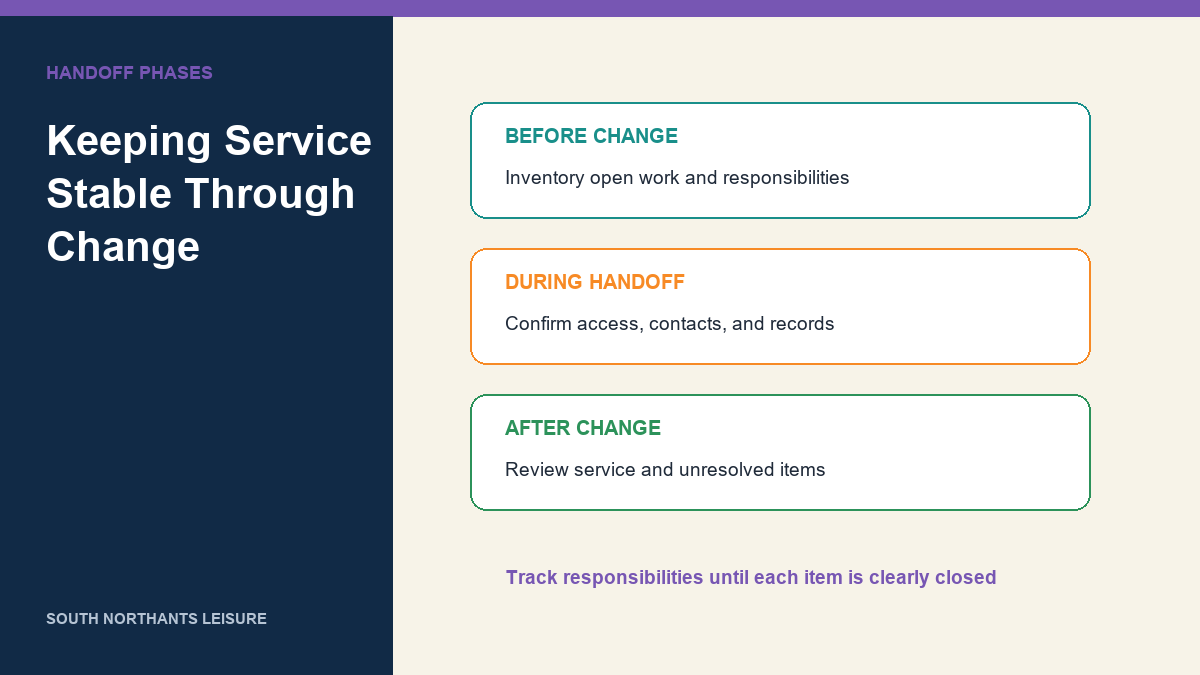
A transition review should identify service, emergency-response, access, record, and project-continuity risks before the new arrangement begins. The review should name each open issue, its owner, interim control, due date, and evidence of closure. Personnel continuity is one factor: if technicians with site knowledge are not retained, schedule documented site walks and verify that replacement staff can find critical assets without relying on memory.
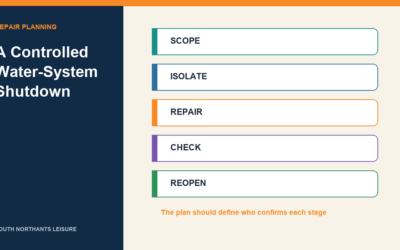
Water-system records also need a clear custodian throughout the change. The HSE record-keeping guidance describes records that a responsible person may need for hot and cold water risk management in Great Britain. The facility should confirm which records, duties, and retention periods apply to it rather than assuming a contractor carries every obligation. A written plan for planning a safe water system shutdown can support continuity, but only authorized and competent people should operate isolation controls.
Establishing Clear Expectations for New Ownership
The transition period is the right time to document expectations with the incoming ownership group. Facility managers should state service priorities, escalation paths, access rules, reporting formats, site inductions, response targets, and administrative requirements before day-to-day control changes where possible. A jointly reviewed action log makes assumptions visible and gives both sides a practical framework for accountability.
The seller and buyer will also be handling transaction-specific tax, contract, and operational work. The IRS sale of a business page explains that a US business sale can involve separate asset classifications and tax treatment. Facility managers do not need to analyze the transaction, but they should set firm dates for the service records, contacts, access credentials, and commitments they depend on.
Securing Warranties, Guarantees, and Service Level Agreements
Warranties, guarantees, and service-level agreements need contract-specific review when a commercial plumbing contractor changes ownership. Whether an obligation transfers can depend on the agreement, transaction structure, consent terms, governing law, and the entities involved. Facility managers should inventory each commitment and obtain qualified legal or procurement advice where the result is unclear.
For large-scale commercial facilities, preventative maintenance contracts and SLAs represent a substantial financial investment and a critical component of risk management. During a handoff, facility managers must scrutinize the new ownership’s capacity and willingness to meet these established parameters. It is imperative to demand written documentation acknowledging the existing SLAs and confirming that the new operational structure is adequately equipped to fulfill these obligations without compromise or delay. If the previous ownership completed a major boiler installation or a complex repiping project shortly before the sale, the facility manager must ensure that the new entity assumes responsibility for the associated labor warranties.
This situation is particularly relevant for plumbing business owners preparing for a sale, because customer commitments and service continuity need to be identified during transaction planning. A facility manager should not assume the parties’ due diligence protects the facility’s interests. Request written clarification of each material warranty and service obligation, record unresolved items, and follow the facility’s contract-review process.
Managing Data Boundaries, Access Control, and Physical Security
In the context of a commercial plumbing contractor handoff, the management of data boundaries, access control, and physical security is a critical, yet frequently overlooked, responsibility for facility managers. Contractors often possess sensitive information regarding the facility, including detailed schematics, security codes, master key access, and schedules of high-security operations. When ownership changes, the chain of custody for this sensitive information and physical access is disrupted.
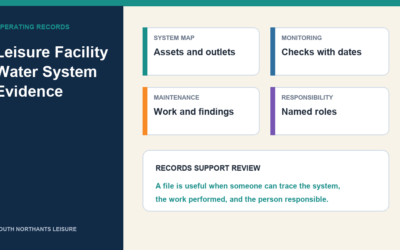
Contractors may use portals or shared storage for maintenance records and manuals. Facility managers should establish how facility-owned data will be exported, transferred, retained, and access-controlled during the transition. Accurate leisure facility water system records give incoming technicians a verified starting point instead of forcing them to reconstruct asset history from incomplete invoices or memory.
Tracking Ongoing Projects, Open Work Orders, and Preventative Maintenance
A transition in ownership rarely occurs at a convenient pause in a facility’s maintenance schedule. Consequently, facility managers must meticulously track the status of all ongoing projects, open work orders, and scheduled preventative maintenance tasks to ensure that nothing falls through the cracks during the handoff. The risk of delayed repairs, missed maintenance intervals, and stalled capital projects increases significantly as administrative systems and personnel shift. A proactive, highly organized approach to tracking these operational variables is essential for maintaining the continuity of facility services.
Preventative maintenance schedules require equal attention. Relevant inspections, filter changes, calibrations, and backflow-related work should be reconciled against the facility’s asset register, risk controls, manufacturer instructions, and applicable requirements. Ask the incoming provider to demonstrate that each active task has been imported with the correct asset, frequency, status, and responsible person.
Comparison: Legacy vs. Transitioned Service Models
Understanding the potential shifts in service models is crucial for setting these expectations. The table below illustrates common differences between a familiar legacy contractor and a newly transitioned entity.
| Service Aspect | Legacy Contractor | Newly Transitioned Contractor |
|---|---|---|
| Site Knowledge | Deep, historical understanding of facility quirks and specific asset locations. | Reliant on documentation, initial site walks, and retained staff. |
| Communication Protocols | Informal, established relationships with direct access to preferred technicians. | Formalized channels, reliance on central dispatch, and management layers. |
| Invoicing & Administration | Familiar formats, established payment terms, and predictable workflows. | Integration of new accounting software, changes to billing cycles. |
| Technology Integration | May utilize older, legacy systems or manual reporting methods. | Introduces new digital portals and automated reporting tools. |
| Service Scope Agility | May include informal practices developed through a long relationship. | Strict adherence to contractual scopes of work, requiring change orders. |
Essential Checklist for Managing the Plumbing Handoff Process
To systematically manage the complexities of a plumbing contractor transition, facility managers should utilize a structured checklist. This ensures that all critical areas are addressed thoroughly and effectively.
- Contract and Legal Review: Inventory each agreement and obtain written clarification of transfer, consent, warranty, and service obligations.
- Security and Access Audit: Revoke all physical keys and fobs from the previous contractor’s personnel. Issue new credentials strictly to vetted employees.
- Personnel and Institutional Knowledge: Inquire about the retention of primary technicians to maintain site-specific institutional knowledge.
- Communication Protocol Establishment: Define clear communication channels and establish protocols for emergency dispatch.
- Work Order and Project Reconciliation: Compile a comprehensive list of all open work orders and scheduled maintenance tasks to ensure continuity.
- Administrative and Financial Alignment: Verify the new contractor’s invoicing procedures and insurance coverage.
- Data Security Verification: Confirm the protocols for transferring and securing your facility’s sensitive data.
Frequently Asked Questions About Plumbing Contractor Transitions
How does a change in ownership of our plumbing contractor affect our existing preventative maintenance contract?
The result depends on the contract, transaction structure, consent terms, governing law, and entities involved. Do not assume the agreement transfers. Ask procurement or legal counsel to review it, and obtain written clarification of service scope, pricing, dates, and responsibility for open work.
What steps should be taken to secure facility access during a contractor transition?
Facility managers should immediately conduct a security audit. This involves revoking all physical keys, electronic fobs, and access codes previously issued to the contractor. Subsequently, new credentials should be issued only to verified personnel of the new company, adhering strictly to the principle of least privilege to ensure physical security is maintained.
Will the warranties on recent plumbing installations remain valid under the new ownership?
Validity depends on the warranty terms, product registration, installer conditions, transaction structure, and applicable law. Review the original documents and contact the manufacturer or responsible contracting entity. Record any labor warranty the incoming owner does not expressly accept.
How can we retain the institutional knowledge of the technicians who know our building?
While facility managers cannot control the new company’s employment decisions, they should strongly advocate for continuity. Request that the primary technicians historically assigned to your site remain on your account. If those technicians depart, insist on a structured knowledge transfer process, including detailed site walks and comprehensive documentation reviews with the incoming staff.
What should we do about open work orders when the contractor changes hands?
Do not assume open work orders will transfer seamlessly. Compile a comprehensive list of all outstanding repairs and projects. Schedule a dedicated reconciliation meeting with the new account management team to review each item line-by-line, confirm its status in their new system, and establish firm timelines for completion.

0 Comments